

Marine Salvage Services Support Safe Boating Throughout San Diego
San Diego is home to one of the most active boating communities on the West Coast. From San Diego Bay and Mission Bay to the offshore waters of the Pacific Ocean, thousands of recreational vessels, commercial fishing boats, sailboats, and marine service vessels operate throughout the region every year. With such heavy marine traffic, accidents and emergencies are inevitable, making marine salvage services an essential part of Southern California’s maritime infrastructure.
Marine salvage professionals provide critical support when vessels become disabled, grounded, submerged, damaged, or abandoned. Their work helps protect boat owners, maintain safe navigation routes, and preserve the health of local waterways. Whether responding to a vessel taking on water near Point Loma or recovering a sunken boat in San Diego Bay, salvage crews possess the expertise and equipment necessary to manage complex marine emergencies.
As boating activity continues to grow throughout San Diego County, the demand for experienced marine salvage providers and marine salvage yards remains stronger than ever.
Common Reasons Boat Owners Need Marine Salvage Services
Marine emergencies can occur unexpectedly, even when vessels are properly maintained. Mechanical failures, severe weather, navigational errors, and equipment malfunctions can quickly create dangerous situations on the water.
Some of the most common reasons boat owners require marine salvage services include:
- Grounded vessels
- Boats taking on water
- Sunken vessels
- Marina collisions
- Offshore mechanical failures
- Storm-related damage
- Vessel fires
- Abandoned boat removal
- Hurricane and storm debris recovery
- Derelict vessel removal
While some incidents may appear minor initially, delays in response often lead to more extensive damage and higher recovery costs. Prompt intervention from a professional marine salvage team can significantly improve the chances of successful vessel recovery.
Marine Salvage Operations in San Diego Bay
San Diego Bay presents unique challenges for marine salvage operations. As one of California’s most important maritime hubs, the bay supports recreational boating, military operations, commercial shipping, tourism activities, and fishing industries.
Marine salvage crews operating within San Diego Bay must navigate:
- Heavy vessel traffic
- Commercial shipping lanes
- Naval operations
- Marina congestion
- Environmental protection zones
- Shallow harbor areas
Because of these factors, salvage operations require careful planning and coordination. Recovery teams must work efficiently while minimizing disruptions to surrounding marine activities.
The ability to safely conduct marine salvage operations within a busy harbor environment is one of the reasons experienced local providers remain invaluable throughout the San Diego region.
How Marine Salvage Professionals Respond to Emergencies
Every marine emergency begins with an initial assessment. Salvage crews gather information regarding the vessel’s location, size, condition, and the nature of the incident before arriving on scene.
Once at the recovery site, crews focus on stabilizing the situation. Immediate objectives often include:
- Preventing additional flooding
- Securing the vessel
- Reducing environmental risks
- Protecting nearby vessels
- Preserving navigation safety
After stabilization, salvage specialists develop a recovery plan tailored to the specific conditions of the incident.
No two marine salvage operations are identical. Water depth, weather conditions, vessel construction, damage severity, and accessibility all influence the recovery strategy.
The Importance of Marine Salvage Yards in San Diego
Marine salvage yards play a critical role in the recovery and disposal process. After a damaged vessel has been recovered, it often needs to be transported to a secure facility where inspections, repairs, dismantling, or recycling can take place.
Marine salvage yards provide a centralized location for:
- Vessel inspections
- Damage assessments
- Temporary storage
- Boat dismantling
- Equipment salvage
- Metal recycling
- Hazardous material removal
Without properly equipped marine salvage yards, many recovery operations would be far more difficult to complete safely and efficiently.
These facilities serve as an important link between vessel recovery and final disposition, ensuring damaged boats are handled responsibly and in compliance with environmental regulations.
Specialized Equipment Used During Marine Salvage Operations
Marine salvage professionals rely on a wide variety of specialized equipment to perform safe and effective recoveries.
Commonly used equipment includes:
Recovery and Tow Vessels
Recovery vessels provide transportation, stabilization, and towing capabilities during salvage operations. These vessels are specifically equipped to handle marine emergencies and assist damaged boats under a variety of conditions.
Inflatable Lift Bags
Lift bags provide controlled buoyancy for submerged vessels. Salvage teams often use them to raise partially submerged or fully sunken boats from the bottom.
High-Capacity Pumps
Flooded vessels frequently require dewatering before they can be safely moved. Industrial pumps remove large volumes of water and help restore flotation.
Commercial Diving Equipment
Divers perform underwater inspections, secure lifting systems, assess hull damage, and assist throughout recovery operations.
Cranes and Heavy Lifting Systems
Large vessels often require crane-assisted recoveries. Cranes may operate from shore facilities, barges, or marine salvage yards depending on the circumstances.
Commercial Divers Are Essential to Marine Salvage Success
Commercial divers play a vital role in marine salvage operations throughout San Diego.
Many recovery situations involve underwater inspections that cannot be completed from the surface. Divers help identify structural damage, assess environmental hazards, and determine the safest recovery method.
Their responsibilities often include:
- Underwater surveys
- Rigging installation
- Hull inspections
- Leak identification
- Lift bag placement
- Recovery supervision
Commercial diving expertise significantly improves recovery efficiency while reducing risks associated with underwater operations.
Environmental Protection During Marine Salvage Operations
Protecting the marine environment is a major priority during every salvage project.
San Diego Bay contains sensitive ecosystems that support fish populations, marine mammals, migratory birds, wetlands, and coastal habitats. A damaged vessel can release fuel, oil, batteries, and hazardous chemicals into the water if not managed properly.
To minimize environmental impacts, marine salvage crews often deploy:
- Oil containment booms
- Absorbent barriers
- Spill response equipment
- Fuel transfer systems
- Water quality monitoring measures
Environmental protection is not simply a best practice—it is often required by local, state, and federal regulations governing marine recovery activities.
Weather Conditions Can Create Significant Recovery Challenges
Although San Diego does not experience hurricanes as frequently as Gulf Coast states, marine salvage crews still face challenging weather conditions throughout the year.
Potential obstacles include:
- Heavy swells
- Strong winds
- Dense fog
- Rough offshore conditions
- Seasonal winter storms
Weather can influence vessel stability, diver safety, visibility, and equipment performance. Salvage teams must continuously monitor changing conditions and adjust recovery plans accordingly.
Successful recoveries often depend on a combination of technical expertise, local knowledge, and careful weather forecasting.
Grounded Vessels Require Immediate Attention
Groundings are among the most common marine incidents throughout Southern California waters.
A grounded vessel may sustain damage to its hull, propulsion systems, rudders, or steering components. Delays in response can worsen damage as tides, currents, and wave action continue to impact the vessel.
Marine salvage professionals use specialized techniques to safely refloat grounded boats while minimizing further structural damage.
Depending on the circumstances, recovery methods may include towing, lifting, dredging, or controlled buoyancy systems.
Marina Accidents and Harbor Collisions
San Diego’s busy marinas experience occasional vessel collisions and docking accidents.
These incidents can result in:
- Hull breaches
- Structural damage
- Fuel leaks
- Sinking risks
- Navigation hazards
Recovering vessels in confined marina environments often requires precision equipment and experienced operators capable of working in tight spaces.
Marine salvage crews frequently coordinate with marina operators to ensure recovery activities proceed safely and efficiently.
Vessel Recovery Following Major Storm Events
Severe storms can create widespread damage throughout local waterways.
Following major weather events, marine salvage teams may be called upon to:
- Recover sunken boats
- Remove navigation hazards
- Relocate displaced vessels
- Clear marina debris
- Conduct environmental cleanup
Large-scale storm recovery operations often require significant manpower, specialized equipment, and coordination with government agencies.
Marine salvage yards frequently serve as staging areas during these recovery efforts.
When a Vessel Becomes a Total Loss
Not every vessel can be successfully repaired after recovery.
Following salvage operations, marine surveyors and insurance representatives evaluate the extent of damage to determine whether repairs are economically feasible.
A vessel may be considered a total loss when:
- Structural damage is severe
- Saltwater intrusion is extensive
- Mechanical systems are destroyed
- Repair costs exceed market value
In these situations, vessel disposal often becomes the next step.
Marine Salvage Yards and Vessel Disposal Services
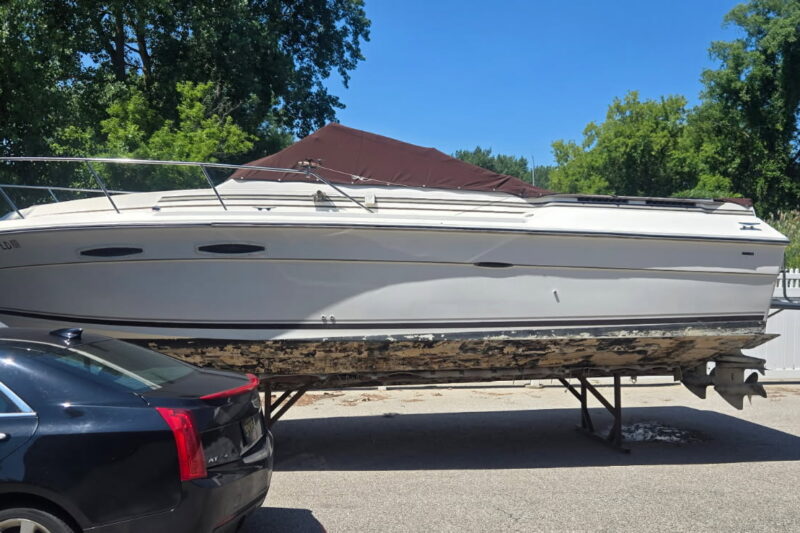
Marine salvage yards are often responsible for handling vessels that cannot be returned to service.
After transport to a salvage facility, the vessel undergoes a systematic disposal process that may include:
- Hazardous material removal
- Equipment salvage
- Component recycling
- Structural dismantling
- Waste disposal
Proper vessel disposal helps prevent environmental contamination while maximizing the recovery of reusable materials.
Many marine salvage yards specialize in both vessel dismantling and marine equipment recycling.
Recycling Valuable Components From Damaged Vessels
One of the most important functions of marine salvage yards is recovering usable equipment from damaged boats.
Components commonly recycled include:
- Marine engines
- Propellers
- Navigation systems
- Electronics
- Fuel tanks
- Stainless steel hardware
- Aluminum structures
Recycling extends the useful life of marine equipment while reducing waste and supporting sustainable boating practices.
For many vessel owners, recovered equipment can help offset a portion of salvage and disposal expenses.
Abandoned Vessel Removal and Marine Salvage Yards
Abandoned boats create serious concerns for both boaters and environmental agencies.
Derelict vessels may leak fuel, obstruct navigation routes, and damage local ecosystems if left unattended.
Marine salvage companies frequently work alongside government agencies to remove abandoned vessels and transport them to marine salvage yards for proper processing.
These programs help maintain safe waterways while reducing long-term environmental risks.
Factors That Affect Marine Salvage Costs
The cost of marine salvage services varies significantly depending on the circumstances of the recovery.
Several factors influence pricing, including:
- Vessel size
- Water depth
- Damage severity
- Accessibility
- Required equipment
- Environmental protection measures
- Labor requirements
- Disposal needs
Simple recoveries may be relatively straightforward, while complex salvage projects involving diving operations, cranes, and transport to marine salvage yards can require substantially greater resources.
Why Marine Salvage Yards Remain Essential to San Diego’s Maritime Industry
Marine salvage yards provide critical support for vessel recovery, environmental protection, recycling, and responsible disposal throughout San Diego County. Without these facilities, damaged vessels would be far more difficult to process safely and efficiently.
Together, marine salvage companies and marine salvage yards help protect boat owners, preserve local waterways, and maintain safe navigation throughout San Diego Bay and the surrounding Pacific coastline.
As boating activity continues to expand across Southern California, the importance of professional marine salvage services and properly managed marine salvage yards will only continue to grow. Their work supports the region’s maritime economy while ensuring damaged and abandoned vessels are handled responsibly for years to come.