Moving Boats for Salvage and Vessel Retirement in Tampa
A boat does not have to be operational to need transportation. In fact, many of the vessels requiring professional hauling are boats that have already reached the end of their useful life. They may be damaged, abandoned, stored for years, missing a usable trailer, or simply too large to move without specialized equipment.
In Tampa, Marine Salvage Yards provides marine transportation and vessel hauling connected to boat salvage, removal, dismantling, scrapping, and end-of-life disposal.
The transportation itself is often the first step in solving a much larger vessel problem. An old boat may need to leave a marina and go to a salvage facility. A damaged fishing vessel may need to be hauled away from a waterfront property. A retired yacht may need to be moved from storage before it can be dismantled.
Instead of treating transportation as a completely separate service, Marine Salvage Yards approaches the move as part of the vessel's overall salvage or retirement process.
Why Boats Need Transportation When They Can No Longer Move
A functioning boat can leave a marina under its own power. A vessel with a failed engine, damaged hull, deteriorated electrical system, or other major problem may not have that option.
This creates a transportation problem.
The owner may know exactly where the boat needs to go but have no practical way to get it there.
Some vessels requiring hauling include:
Non-operational recreational boats
Retired fishing vessels
Damaged watercraft
Aging fiberglass boats
Sailboats being retired
Larger yachts and cruisers
Boats without usable trailers
Abandoned vessels
Boats being transported for dismantling
Watercraft being moved for salvage or disposal
Marine Salvage Yards helps address the transportation side of these projects so owners are not left trying to figure out how to move an oversized or disabled vessel themselves.
Tampa Bay Vessel Transportation
Tampa Bay creates a wide range of marine transportation situations.
Boats may be located at marinas, waterfront properties, storage facilities, boatyards, commercial locations, or private residences. Some vessels may be actively used, while others may have remained stationary for months or years.
When an unwanted vessel needs to be removed, the distance between its current location and its next destination can be an important consideration.
A boat might need to travel from a marina to a dismantling location. Another vessel may need to leave private property and be transported toward a salvage operation. A damaged watercraft could require hauling because it can no longer travel normally.
Marine Salvage Yards provides transportation solutions designed around these types of marine projects.
Boat Hauling From Tampa Marinas
Marinas can become difficult places to store a vessel that is no longer being used.
Storage charges continue, space remains occupied, and the boat may deteriorate while sitting in the same location. If the owner has decided to retire the vessel, arranging transportation is often necessary before anything else can happen.
Marine Salvage Yards can assist with hauling projects involving boats that need to leave marina environments for salvage, dismantling, disposal, storage, or another appropriate destination.
The vessel's location and condition can affect how the move needs to be organized. A boat secured in a marina is different from one already sitting on a trailer, and a severely damaged vessel may require additional planning.
Transportation begins with understanding what is actually sitting at the dock and how it can be safely moved.
Non-Operational Boat Transport
One of the most important distinctions in marine transportation is whether the vessel can move under its own power.
A dead engine should not prevent an owner from being able to retire a boat. Neither should a vessel that has been sitting unused long enough for its mechanical systems to stop functioning.
Marine Salvage Yards specializes in the transportation side of marine salvage and removal projects involving vessels that may no longer be operational.
This gives owners another option when the boat is not worth repairing.
Instead of investing in an engine rebuild, electrical work, batteries, steering repairs, or other mechanical work simply to make the vessel movable, the owner can explore hauling it as-is toward its next stage.
When the ultimate goal is salvage, dismantling, or disposal, transportation does not necessarily require returning the boat to operating condition.
Salvage Transportation for Damaged Boats
Damage can turn an ordinary boat relocation into a salvage transportation project.
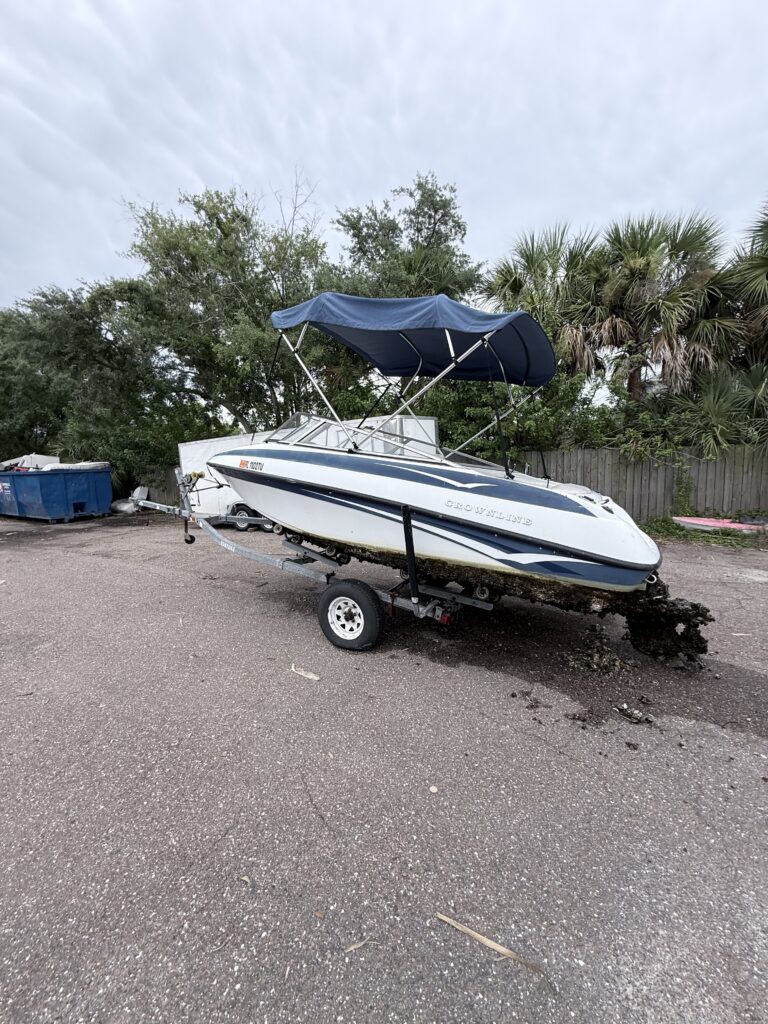
A vessel may have been involved in a collision, damaged by a storm, grounded, flooded, or left exposed to the elements for years. Structural damage can affect the way the boat needs to be loaded and transported.
Marine Salvage Yards provides hauling connected to these types of situations.
The purpose may be to move the boat away from a marina, clear it from private property, transport it for dismantling, or relocate it to a facility where the vessel can be evaluated and processed.
Damaged watercraft should not simply be treated like ordinary trailer cargo. The condition of the hull, equipment, trailer, and surrounding area can all affect the transportation plan.
Transporting Fishing Vessels
Fishing boats can have a long working life, but eventually even heavily used commercial and recreational vessels need to be retired.
An older fishing boat may have extensive equipment, a large fuel system, specialized gear, or a heavier construction than smaller recreational watercraft.
Once the vessel is no longer economically useful, transportation becomes part of the retirement process.
Marine Salvage Yards can provide hauling solutions for fishing vessels being moved for salvage, dismantling, storage, or disposal.
This is especially useful when the boat is no longer capable of operating normally. Rather than putting additional money into an aging vessel simply to move it, professional transportation can provide a path toward getting it out of the way.
Sailboat and Yacht Hauling
Larger recreational boats bring another set of transportation considerations.
Sailboats can involve tall masts and extensive rigging, while yachts and cruisers can be substantial in both length and weight. Their dimensions can make ordinary trailer transportation impractical.
Marine Salvage Yards handles transportation from a salvage-oriented perspective, helping owners move larger vessels when the reason for the haul involves retirement, removal, dismantling, salvage, or disposal.
The transportation requirements will depend on the individual boat.
A vessel's length, beam, height, weight, construction, current location, and condition all matter when determining how it can be moved.
Boat Transportation for Dismantling
Sometimes the destination is not another marina.
When a vessel has reached the end of its useful service life, it may need to be transported specifically so it can be dismantled.
Dismantling can involve removing engines, mechanical systems, electronics, hardware, fuel-related components, interior fixtures, trailers, and other equipment. The remaining hull can then be handled as part of the vessel's disposal process.
Marine Salvage Yards connects transportation with that larger operation.
The boat has to physically reach the location where dismantling can take place. For owners, that means transportation becomes the bridge between having an unwanted vessel sitting on their property and actually completing the retirement process.
Moving Boats From Private Property
Boats stored on private property can become surprisingly difficult to remove.
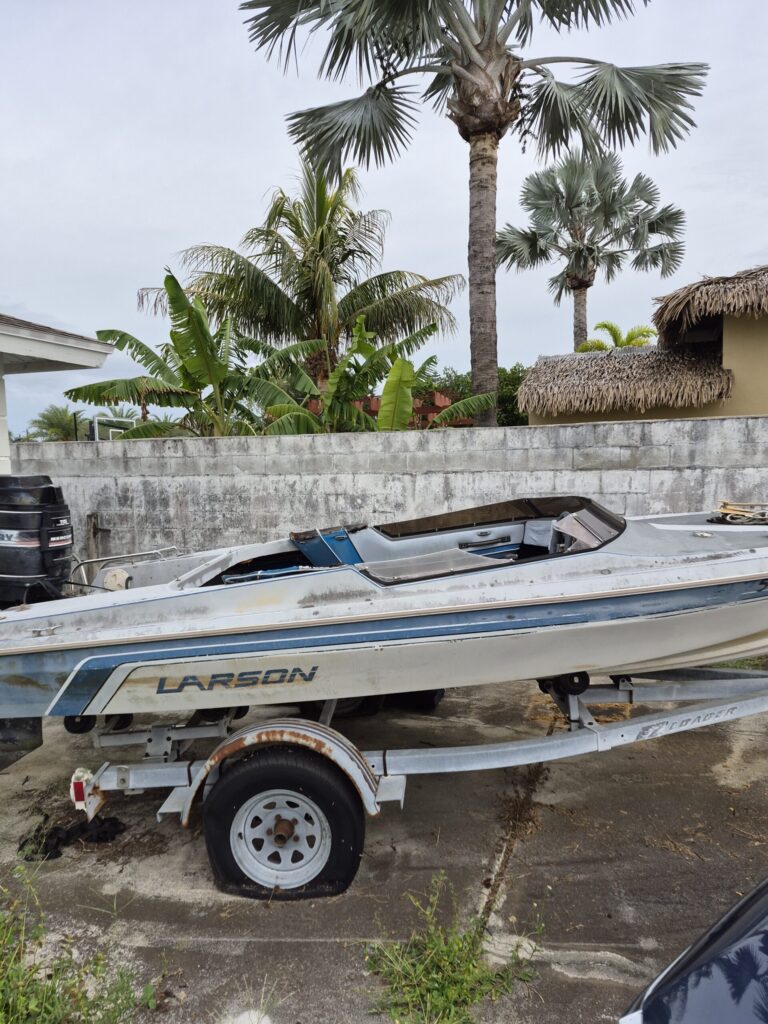
A vessel may have originally been brought home on a trailer with plans for future restoration. Years later, the trailer may be deteriorated, tires may be unusable, and the boat itself may have suffered extensive weather exposure.
The owner may now want the entire setup gone.
Marine Salvage Yards provides hauling solutions for boats occupying residential and commercial properties in the Tampa area.
Property cleanouts, estate projects, construction work, property sales, and general cleanup can all create situations where an old boat needs to be transported away.
Getting the vessel removed can also make the rest of the property easier to use.
Boat Transportation After a Storm or Accident
Florida's coastal environment means boat owners can occasionally find themselves dealing with vessels that have been damaged by severe weather or marine accidents.
When a damaged vessel can no longer remain where it is, transportation may become urgent.
A boat that has taken on water, suffered structural damage, or been displaced from its normal location may need to be hauled away for salvage or disposal.
Marine Salvage Yards can help owners address the transportation component of these situations.
Rather than leaving a damaged vessel sitting indefinitely while its condition worsens, owners can begin planning how the boat will be removed and where it needs to go next.
Long-Distance Vessel Transportation
Some Tampa-area boats need to travel beyond the immediate region.
A vessel may be moving to another part of Florida, heading to a different storage location, or traveling out of state for salvage or dismantling.
Long-distance transportation requires attention to the boat's dimensions, weight, condition, loading method, and destination.
Marine Salvage Yards can help with transportation projects where the vessel's movement is part of a broader salvage or retirement plan.
The objective is to move the watercraft from its current location toward its intended destination without requiring the owner to make an aging or non-operational boat functional again.
Marine Transportation With a Purpose
The difference between ordinary boat transportation and Marine Salvage Yards is the purpose behind the move.
This is transportation for boats that need to be salvaged, removed, retired, dismantled, scrapped, or disposed of.
That makes the service particularly relevant to owners who have reached the end of the road with a vessel.
Whether the boat is sitting at a Tampa marina, stored on private property, damaged after an accident, or simply too old to continue maintaining, transportation can be the first step toward resolving the problem.
Marine Salvage Yards provides the hauling and marine transportation support needed to move unwanted and end-of-life vessels toward their next stage.
If your Tampa-area boat needs to be transported because it is being salvaged, retired, dismantled, or removed, Marine Salvage Yards can help you determine the next step.
Moving Vessels Between Marinas, Yards and Properties
A vessel may need to move several times during its lifetime. It can begin at a dealer, spend years at a marina, move to private storage, and eventually require transportation to a salvage or dismantling location.
When that final move arrives, the vessel may no longer be capable of moving under its own power.
Marine Salvage Yards provides transportation support for these situations, helping owners address the physical movement of boats that are being relocated, retired, salvaged, dismantled, or disposed of.
The destination can vary from project to project. A boat may need to leave a marina for a storage yard, move from private property to a dismantling location, or travel to another facility as part of a larger salvage operation.
Boat Relocation for Storage and Property Changes
Sometimes a boat is not immediately being disposed of. An owner may simply need to relocate it.
A property may be sold, a lease may end, a marina arrangement may change, or a storage location may no longer be available. A vessel that cannot be moved under its own power can quickly become a transportation problem.
Marine Salvage Yards can assist with hauling when a vessel needs to be relocated because of a change in ownership, storage arrangements, property use, or retirement plans.
For older watercraft, relocation can also become the first step toward eventual salvage or disposal.
Moving the boat before it deteriorates further may make it easier to deal with the vessel later.
Transportation for Abandoned Boats
An abandoned vessel can create a complicated situation for marinas, property owners, and storage facilities.
The physical transportation is only one part of the process. Ownership, authorization, documentation, and applicable local requirements may need to be addressed before an abandoned boat can legally be moved.
Once the necessary authorization is in place, Marine Salvage Yards can provide the hauling component of the project.
This may involve transporting an abandoned vessel away from a marina, private property, storage facility, or other location so it can proceed toward salvage, dismantling, or disposal.
Property owners dealing with unwanted watercraft should avoid simply moving or disposing of someone else's vessel without establishing the appropriate authority first.
Transportation to Marine Salvage Facilities
For end-of-life vessels, transportation and salvage are closely connected.
The boat may be sitting in a location where dismantling is not practical. It needs to be moved before engines, equipment, hardware, fiberglass components, or other parts can be separated.
Marine Salvage Yards provides the transportation side of this process.
The vessel can be hauled from its current location toward the facility or destination where the salvage and dismantling work can take place.
This is particularly useful for boats that have no realistic future as operating watercraft.
Rather than continuing to pay for storage while the boat deteriorates, owners can arrange transportation as the first step toward completing the retirement project.
Trailered Boat Transportation
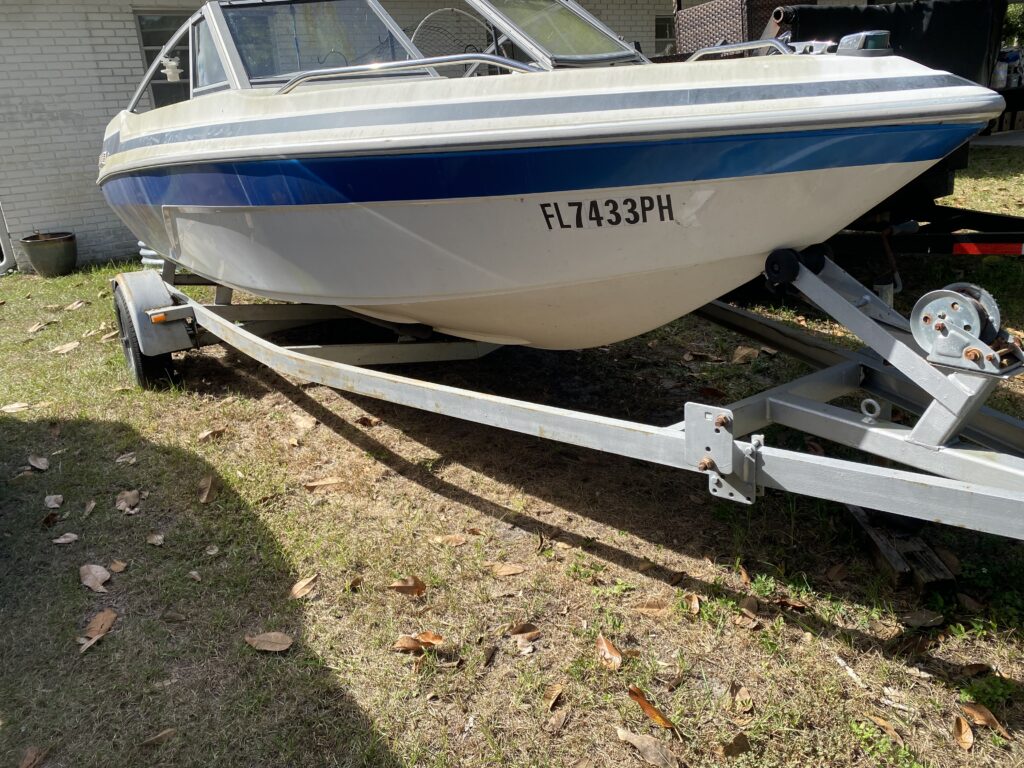
Some boats are already mounted on trailers, but that does not automatically mean they are easy to move.
A trailer can sit unused for years. Tires can deteriorate, wheel bearings can seize, axles can develop problems, and frames can suffer from corrosion or structural deterioration.
The boat itself may also be too old or damaged to transport safely using the existing setup.
Marine Salvage Yards can evaluate hauling projects involving boats and trailers as part of the overall removal or salvage process.
The condition of the trailer is an important consideration when determining how a vessel should be transported. An owner should not assume that an old trailer is road-ready simply because the boat is still sitting on it.
Oversized Boat and Vessel Hauling
Large vessels require a different transportation mindset.
A boat's length is only one consideration. Beam, height, weight, hull design, equipment, trailer configuration, and access to the loading area can all affect the move.
Large cruisers, yachts, commercial fishing vessels, and other substantial watercraft may require transportation planning beyond what a standard pickup truck and trailer can provide.
Marine Salvage Yards focuses on hauling as part of a marine salvage project, which means the condition and purpose of the vessel are considered along with its physical dimensions.
If a large boat is being moved for dismantling, salvage, removal, or disposal, the transportation plan needs to account for the entire project rather than simply the distance involved.
Transporting Boats With No Trailer
Not every boat comes with a usable trailer.
A vessel may have been stored on blocks, stands, cradles, or another support system. Some larger boats were never designed to be transported using a conventional trailer in the first place.
When such a boat needs to leave its current location, transportation becomes a more involved process.
Marine Salvage Yards can assist with vessel hauling projects where the boat does not have a standard trailer available.
This can be particularly important for older vessels being removed from properties, boatyards, marinas, or storage locations.
The boat's dimensions, weight, condition, and access to the location all help determine the transportation requirements.
Gulf Coast Fishing Vessel Transportation
Fishing vessels can accumulate years of wear while working in demanding marine conditions.
Eventually, an owner may decide that a vessel has reached the end of its commercial or recreational service. When that happens, the boat may need to be transported away for storage, salvage, dismantling, or disposal.
Marine Salvage Yards provides hauling solutions for retired fishing boats and other watercraft when transportation is part of the vessel's retirement.
A commercial vessel does not necessarily need to be restored before it can be moved. If its future involves dismantling or salvage, transportation can be arranged around its existing condition.
This allows the owner to focus on retiring the vessel rather than putting additional money into making an aging boat operational again.
Yacht Transportation Connected to Salvage
Yachts and larger pleasure boats can also reach a point where transportation is necessary for reasons other than recreational use.
An older yacht may have significant mechanical problems, structural deterioration, or accumulated storage costs. The owner may decide that continuing to maintain it is no longer practical.
If the yacht is being retired, transportation may be required to move it toward salvage, dismantling, or disposal.
Marine Salvage Yards provides hauling solutions for larger recreational vessels based on the individual project.
The goal is to help move the yacht from its current location to the next stage without requiring unnecessary restoration work.
Boat Transportation After Storm Damage
Storm-related damage can leave a boat in a condition where normal movement is no longer possible.
A vessel may be displaced, flooded, damaged against a dock, or left with structural or mechanical problems following severe weather.
Once the immediate situation has been addressed, the owner may need to decide whether the boat should be repaired, stored, salvaged, or disposed of.
When repair is not practical, transportation becomes a major part of the solution.
Marine Salvage Yards can provide hauling support for damaged boats that need to be moved toward salvage or disposal.
The transportation approach depends on the vessel's condition and location, but the purpose remains the same: get the damaged watercraft out of the way and toward its next destination.
Long-Distance Marine Hauling
A Tampa boat does not necessarily have to remain in Tampa.
An owner may need to move a vessel elsewhere in Florida or across state lines. The destination could be another marina, private property, storage yard, shipyard, salvage operation, or dismantling facility.
Long-distance marine hauling requires accurate information about the vessel before transportation begins.
Length, beam, height, weight, condition, trailer availability, and pickup location can all affect the logistics.
Marine Salvage Yards can assist with long-distance transportation when the move is connected to salvage, removal, relocation, dismantling, or disposal.
Boat Transportation During Estate Cleanouts
Estate situations can produce unexpected marine transportation needs.
A property may contain an old boat that belonged to a family member, but the new property owner may have no interest in keeping it.
The vessel may also have been sitting unused for years, making it difficult to sell or move.
Marine Salvage Yards can assist with hauling unwanted boats as part of property cleanouts and estate projects.
Removing an oversized vessel can make it easier to prepare the property for sale, transfer, renovation, or another use.
Commercial Property and Marina Cleanouts
Businesses can encounter the same problem on a larger scale.
A boatyard may need to clear a long-term storage vessel. A commercial property owner may need to remove an abandoned boat. A contractor may encounter a watercraft during a redevelopment project.
In these situations, transportation is often the critical step.
Marine Salvage Yards can provide hauling connected to commercial marine cleanouts, salvage projects, vessel retirement, and disposal.
Removing the boat allows the property owner or business to move forward with whatever project comes next.
Planning a Vessel Transportation Project
Before arranging transportation, owners should gather as much information about the boat as possible.
Useful details include the vessel's:
Length
Beam
Height
Approximate weight
Hull type
Current condition
Trailer status
Operational status
Exact pickup location
Intended destination
Photos showing access and vessel condition
These details can help establish what type of hauling project is involved.
A small trailerable fishing boat is a very different transportation project from a large non-operational yacht sitting in a marina.
The more accurate the information, the easier it can be to understand the scope of the move.
Marine Transportation Built Around Salvage
Marine Salvage Yards is not simply about moving boats from one recreational destination to another.
The transportation services are built around vessels that need to be removed, salvaged, dismantled, scrapped, relocated, or disposed of.
That makes transportation a natural extension of the company's marine salvage services.
For Tampa-area owners, the biggest challenge may not be deciding what should happen to an unwanted boat. It may be figuring out how to physically get the vessel there.
Marine Salvage Yards helps bridge that gap with marine transportation and hauling solutions designed around the condition and purpose of the vessel.
Move the Vessel and Move Forward
An old or damaged boat can remain a problem as long as it stays where it is.
If the vessel needs to leave a marina, storage yard, private property, or commercial location, transportation is the first step toward resolving the situation.
Marine Salvage Yards provides vessel hauling, marine transportation, salvage transport, boat relocation, dismantling support, and end-of-life watercraft removal throughout the Tampa region.
Whether the destination is another property, a storage facility, a salvage operation, or a dismantling location, the right transportation plan can make the rest of the project possible.
If you have a Tampa-area vessel that needs to be moved because it is being salvaged, retired, dismantled, or removed, contact Marine Salvage Yards with the vessel details and location to begin planning the haul.